About the Author
Maris Skujins
Maris Skujins is Chief Growth Officer at Scandiweb, a commerce technology agency, and the author of The Trust Sequence, built from 600+ recorded conversations.

I have been selling since I was ten. My father ran photographic shops, and the empty 35mm film canisters went in the bin until I started selling them at school for pocket money. The lesson stayed with me for thirty years: something is worth what the person in front of you needs it to be, and your job is to find out what that is before you open your mouth.
At 21 I moved to London with no money and no clients and co-founded a building survey company. We needed a laser scanner that cost £60,000 to do the work properly, so we called the manufacturer, a firm that supplies Boeing, and talked them into lending us one. That was the Trust Sequence before it had a name.
After that came the bike company. I restored old British racers in a fourth-floor flat, listed them on a blog with a PayPal button, and carried each one down the stairs for a test ride. Single Speed Company grew from that flat to a workshop in Hackney and then to customers in 33 countries, on Shopify before most people had heard of it. I learned more about how people decide to buy in those years than in any training since, because every sale was my rent.
Two ventures after that did not work out. They taught me the part the successes had hidden, which is that a good product and good execution count for nothing until the person across the table trusts you with their time and their money.
Today I am Chief Growth Officer at Scandiweb, a commerce technology agency. My teams own the first conversation with every new client and the technology assessment that follows it, which means I sit with founders, boards and technology leaders at the moment they have to decide what their business will run on for the next decade. I lead the people who turn that decision into a digital strategy and a commerce architecture, and I stay in the account long after the contract is signed, because the signature is where the relationship starts.
The companies I have done this with include The New York Times, The Metropolitan Museum of Art, Läderach, Cook Medical, Purdy's Chocolatier, Scouting America, Lafayette 148 and Sports Group Denmark, across North America, Europe and Asia-Pacific. The work is the same whether the client sells chocolate, museum memberships or medical devices: understand what they are trying to achieve, cut the decision down to a step they can take, and say plainly what we stand to gain from it.
Somewhere past the five hundredth recorded call I stopped asking what worked and started asking why. Why did one conversation end in a yes when the product, the price and the team were the same as the one that did not? The answer was the order in which trust was built. The best calls followed a sequence. The worst ones skipped a step.
The Trust Sequence names that sequence and shows it from both sides of the table. If you need a yes, it shows you the order to earn it in. If you are the one who has to give it, it shows you what to look for and what to ask for when it is missing. I sell for a living. This is what I would want you to know when you sit across from me.
I live in Bali with my wife and daughter, and I still drive a 1999 Land Rover Defender, which is its own lesson in trust.
In numbers
Speaking and press
Maris speaks on three subjects.
How people decide to trust you with their money
The sequence behind a yes, from 600+ recorded conversations.
Buying from someone who knows more than you
What a trustworthy expert does, and the questions that reveal one who is not.
Phasing a decision you cannot afford to get wrong
The smallest first step, from technology platforms to house renovations.
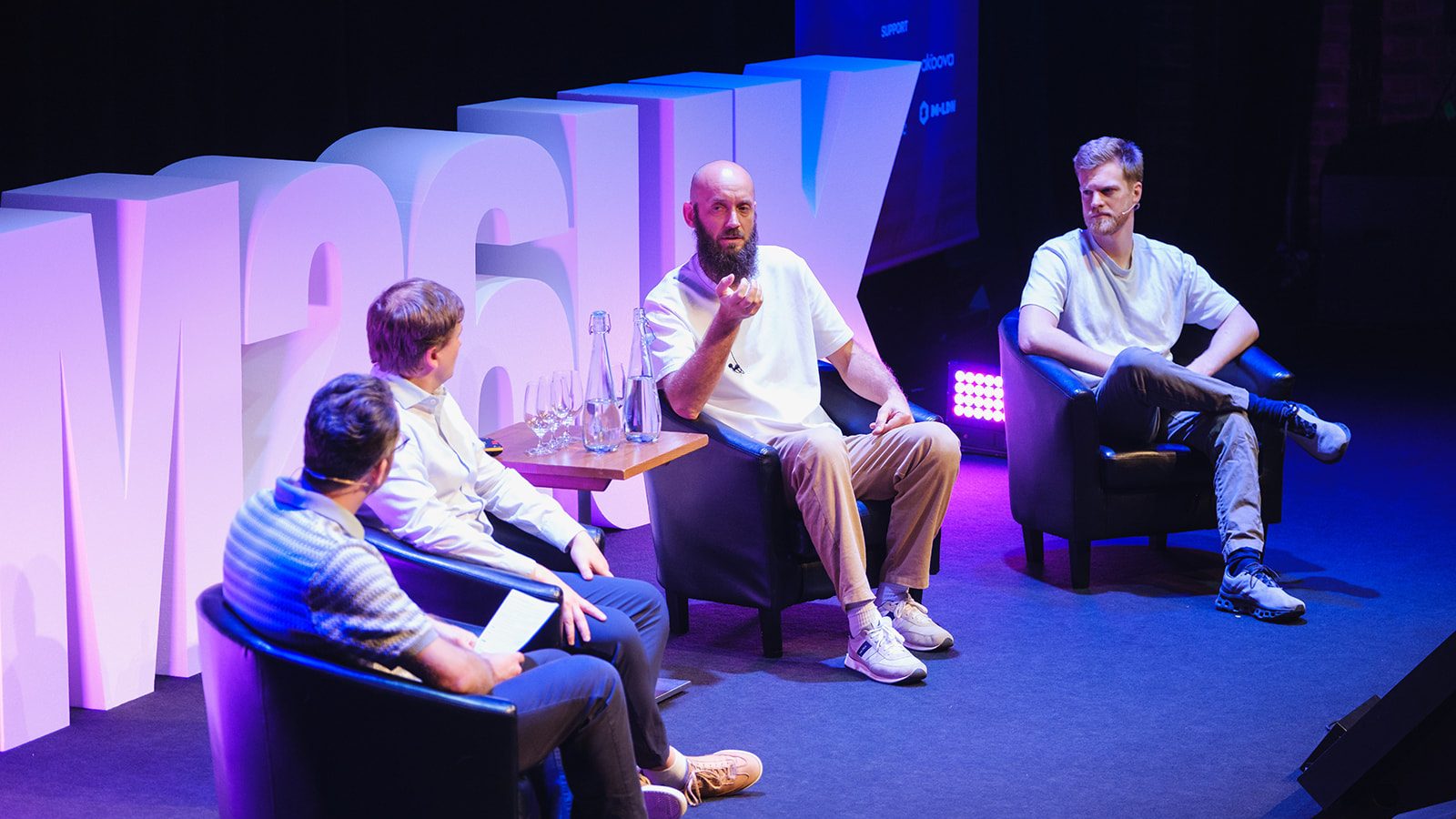
Recent: panel at Meet Magento UK 2026, London.
Book Maris to speakDownload the panel photographPhoto credit: Owen Billcliffe, Meet Magento UK 2026Press contact: [email protected]
Free for subscribers
Read the chapters before the book.
The book is in development. Join the list and you get the chapters as they are written, before anyone else, and the full book when it is done.
The book is in development. Join the list and you get the chapters as they are written, before anyone else, and the full book when it is done. The first email carries "What 600+ recorded conversations taught me", the patterns in the ones that closed.
No spam. No funnels. Unsubscribe any time. How your email is handled.
You're in
Check your inbox. The first email is on its way, and the chapters follow as they are written.